
Brazilian lymphatic massage before-and-after photos show how a person appears in two images. They do not, on their own, establish a measured change, explain its cause or show how long it lasts. Reading the photographs with those limits in mind makes them more useful when exploring a service.
At SBS Cult, our Lymphatic Wellness folio contains three selected client pairs. We use Pair 1 here to explain what is documented, what to compare and which conclusions need more than a photograph.
What Pair 1 documents
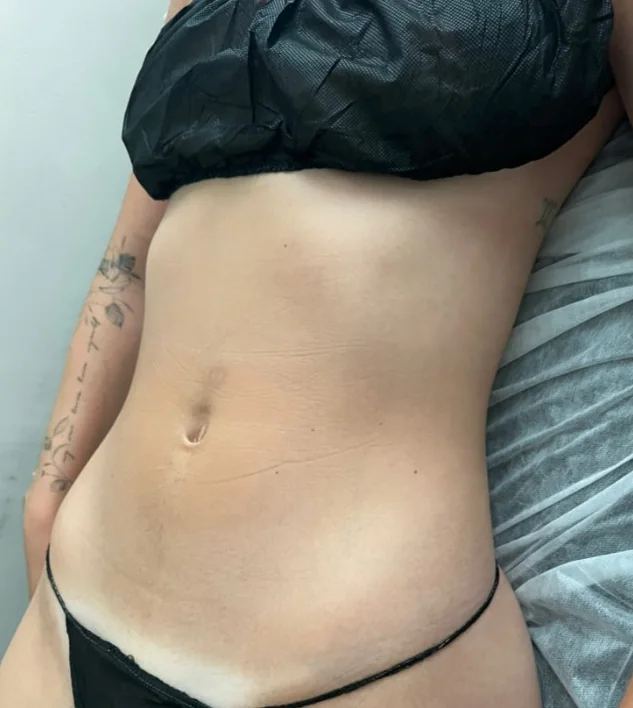
Pair 1 shows the same client’s abdomen before and after Brazilian lymphatic massage with SBS Cult. The record for these photographs does not establish the number of sessions, the elapsed interval between images or any body measurements. “Before” and “after” identify their order; they do not mean one appointment or a same-day comparison.
Pair 1 — Before
Pair 1 — After
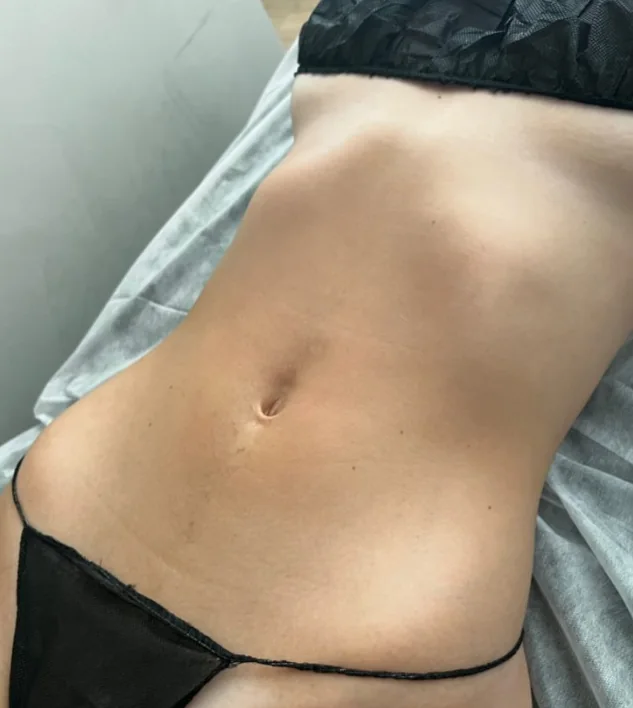
Both website images have the same crop ratio and dimensions. That gives them a consistent display format. It does not establish that the original photographs used identical lighting, camera settings, distance or positioning.
Compare the photographs before interpreting the body
Useful comparisons begin with how an image was made. The American Society of Plastic Surgeons’ photographic guide introduction explains that controlled anatomical poses help make comparisons meaningful. The abstract of a 1998 paper on photographic standards similarly emphasizes consistent lighting, camera settings and patient position.
Those sources concern surgical documentation. Their comparison principles help explain what to look for; they are not evidence about massage outcomes or confirmation of SBS’s capture conditions.
When viewing a pair, consider these features together:
- Lighting: Are the direction and brightness similar? Notice shadows as well as the outline of the body.
- Position: Does the person appear to be resting in a similar position, with comparable placement of the torso and limbs?
- Perspective: Does the camera appear to view the body from a similar angle and distance?
- Framing: Is a similar area included, at a comparable displayed scale? Matching image dimensions do not establish matching camera distance.
For Pair 1, the original capture conditions are unrecorded. You can observe the pictures, but cannot use them to rule out photographic differences. Missing documentation also gives no basis to conclude that an image was manipulated.
From appearance to measurement and follow-up
A photograph, a measurement and follow-up answer different questions. Treat them as an evidence ladder: each step requires information the previous step cannot supply.
| Question | What is shown or documented here | What would be needed for a stronger conclusion |
|---|---|---|
| What am I looking at? | Two photographs of the same client’s abdomen, identified as before and after SBS Brazilian massage. | Original capture records to establish how closely the photography conditions matched. |
| How much changed? | Appearance in the images; no recorded body measurements. | Measurements taken with a stated, consistent method. Pixels are not a substitute for inches or pounds. |
| What happened between the images? | The before-and-after order; no recorded interval or session count. | Dated visit and image records, plus relevant context about other changes or care. |
| Did massage cause a difference? | A sequence of images, without evidence isolating a cause. | Evidence that separates the intervention’s effect from other explanations. |
| Did a difference last? | Two images, without documented follow-up. | Later observations or measurements at recorded intervals. |
This is why a visible difference cannot be converted into a percentage, a treatment schedule or a promise of lasting change. Even a measured difference would still leave the questions of cause and duration to be answered.
A changed appearance does not establish fat loss
Cedars-Sinai’s explanation of lymphatic drainage massage says evidence does not support slimming claims. It describes a possible temporary change in appearance from moving fluid. That general explanation does not identify what accounts for the appearance in Pair 1, establish fat loss or supply a duration for any individual change.
Clinical manual lymphatic drainage also has a specific healthcare context. Cleveland Clinic describes light-pressure, fluid-directed care for lymphedema. That context does not establish the method or benefits of an SBS wellness visit, and a photograph cannot determine whether someone needs that clinical care.
If symptoms are prompting your search, seek appropriate healthcare assessment rather than interpreting them through another person’s photographs. NCCIH advises against using massage to postpone care for a medical problem and recommends discussing suitability with a healthcare provider when uncertain.
Use the photos as context for your decision
Our three-pair folio is a selection of examples, rather than a representative sample of clients. It cannot tell you how often a particular appearance occurs or predict what another person will experience. Another client’s pictured body does not need to become your goal.
At SBS Cult, Brazilian lymphatic massage is offered through Lymphatic Wellness for nonsurgical wellness and maintenance. Your goals, suitability and the visit details are discussed before arranging care. The photographs can introduce that conversation; your own circumstances guide the decision.